
Suresh Deswal

बजट 2026 में किसान की आशा और निराशा

देश की अर्थव्यवस्था की रीढ़ कही जाने वाली कृषि को लेकर हर बजट से किसानों को बड़ी उम्मीदें रहती हैं। बजट 2026 भी इससेअलग नहीं था। सरकार ने “विकसित भारत” के लक्ष्य को सामने रखते हुए कई घोषणाएँ कीं, लेकिन सवाल यह है कि ज़मीनी स्तरपर किसान को इससे कितना लाभ मिलेगा। इस लेख में हम बजट 26 में कृषि क्षेत्र को क्या मिला और क्या छूट गया, दोनों काआकलन कर रहे हैं। वित्त मंत्री निर्मला सीतारमण ने 1 फरवरी, 2026 को संसद में आगामी वित्तीय वर्ष का सरकारी बजट पेश किया। वे लगातार नौबजट पेश करने वाली पहली वित्त मंत्री बनीं। उन्होंने वर्ष 2026-27 के लिए भारत सरकार के अनुमानित आय और व्यय का विवरणप्रस्तुत किया। सीतारामन ने कहा कि हम विश्व की सबसे बड़ी अर्थव्यवस्था बनने की ओर अग्रसर हैं। हमने यह निश्चय किया है किविकास का लाभ किसानों, आदिवासियों, महिलाओं और युवाओं तक पहुंचना चाहिए। सभी बदलावों और कटौतियों के बीच देखते हैंकिसान कि आशा और निराशा. आइए जानते हैं कि इस बजट में कृषि क्षेत्र के लिए क्या घोषणाएं की गई हैं? वित्त मंत्री सीतारमण ने पिछले बजट में कृषि को विकास का “प्रथम इंजन” बताया था और अपने भाषण की शुरुआत इस क्षेत्र के लिएसरकार की प्राथमिकताओं को रेखांकित करते हुए की, और कहा था कि कृषि क्षेत्र अर्थव्यवस्था की रीढ़ रहा है। केंद्रीय वित्त मंत्रीनिर्मला सीतारमण का बजट भाषण कृषि क्षेत्र विशेष रूप से चर्चा में रहा था, जिसमें उन्होंने इस क्षेत्र पर केंद्रित कम से कम नौ नएमिशनों या कार्यक्रमों की घोषणा की थी, साथ ही देश को "विश्व की खाद्य टोकरी" बनाने में किसानों की भूमिका को भी मान्यता दी।ठीक विपरीत बजट 2026 में 85 मिनट के भाषण में 48 मिनट बाद कृषि शब्द सुनाई दिया कुछ आशा जगी लेकिन वास्तविककिसान के लिए आशा जल्द ही निराशा में बदल गई और बजट 2026 में कृषि के लिए बजट आवंटन 3.38% से घटकर 3.04%हो गया है। हालांकि, कृषि मंत्रालय को 1.37 लाख करोड़ रुपये का आवंटन मिला है, जो पिछले साल के 1.27 लाख करोड़ सेमामूली बढ़ोतरी दिखाता है, लेकिन महंगाई और बढ़ती लागतों को ध्यान में रखें तो यह रियल टर्म्स में नेगेटिव वृद्धि है। पिछले दसवर्षों में कृषि बजट कई गुना बढ़ा है, लेकिन किसानों की वास्तविक आय उसी अनुपात में नहीं बढ़ी। डीजल, खाद, बीज औरकीटनाशकों की बढ़ती कीमतों ने सरकारी सहायता को काफी हद तक निष्प्रभावी कर दिया है। ज्यादा आमदनी देने वाली फसलों कोप्राथमिकता दी गई है। लेकिन छोटे किसानों की समस्या का कोई समाधान नहीं है। बजट से साफ है कि कृषि और किसान सरकारकी प्राथमिकता नहीं दिखाई दी। यह बजट आर्थिक सर्व्रेक्षण और बजट पूर्व परामर्श से बिलकुल परे रहा है।   खेती में तकनीक को बढ़ावा देने के लिए एक बड़े कदम के तहत, वित्त मंत्री निर्मला सीतारमण ने केंद्रीय बजट 2026-27 में 'भारतविस्तार' लॉन्च करने की घोषणा की. यह एक मल्टीलिंगुअल (कई भाषाओं) AI टूल है जो एग्रीस्टैक पोर्टल और ICAR की कृषिपद्धतियों को एडवांस्ड AI सिस्टम के साथ इंटीग्रेट करेगा, जिससे किसानों के संसाधन एक्सेस करने और फैसले लेने के तरीके मेंबदलाव आएगा. वित्त मंत्री के मुताबिक, भारत विस्तार नाम का यह प्लेटफॉर्म खेती की प्रोडक्टिविटी बढ़ाएगा, जोखिम कम करने केलिए कस्टमाइज्ड सलाह देगा, और लाखों किसानों को जमीनी स्तर पर बेहतर विकल्प चुनने में मदद करेगा, जो खेती में AI इंटीग्रेशनके लिए सरकार के विजन के मुताबिक है.सरकार और कॉरपोरेट क्षेत्र यह दावा कर रहे हैं कि आर्टिफ़िशियल इंटेलिजेंस (AI), ड्रोनऔर डिजिटल तकनीक किसानों की आय बढ़ाने में क्रांतिकारी भूमिका निभाएगी। लेकिन ज़मीनी हकीकत इस दावे को पूरी तरह सहीसाबित नहीं करती। तकनीक खेती का साधन हो सकती है, किसान की आय की गारंटी नहीं।भारत में 85 प्रतिशत से अधिक किसान छोटे और सीमांत हैं, जिनके पास न तो पूंजी है और न ही महंगी तकनीक अपनाने की क्षमता। ड्रोन, सेंसर, सैटेलाइट डेटा और AI आधारित ऐप्स आज भी बड़े किसानों और कॉरपोरेट फार्मिंग तक सीमित हैं। ऐसे में तकनीक से होने वाला लाभ एक छोटे वर्ग तक सिमट कर रह जाता है। दूसरी बड़ी समस्या यह है कि किसान की आय उत्पादन से नहीं, दाम सेतय होती है। अगर तकनीक से पैदावार बढ़ भी जाए, लेकिन MSP की कानूनी गारंटी न हो और बाज़ार में दाम गिर जाएं, तोकिसान को नुकसान ही होता है। इतिहास गवाह है कि अधिक उत्पादन के बावजूद किसान घाटे में गया है। AI आधारित खेती मेंकिसान के डेटा का सवाल भी गंभीर है। यह स्पष्ट नहीं है कि खेत, फसल और मिट्टी से जुड़ा डेटा किसके नियंत्रण में होगा। अगर इसकालाभ निजी कंपनियों को मिला और जोखिम किसान के हिस्से आया, तो तकनीक शोषण का नया माध्यम बन सकती है। तकनीक तबही कारगर होगी जब उसे मजबूत कृषि नीति से जोड़ा जाए—कानूनी MSP, भरोसेमंद फसल बीमा, लागत नियंत्रण और बाज़ारसुरक्षा के साथ। बिना आर्थिक सुरक्षा के AI केवल एक आकर्षक नारा है। कृषि क्षेत्र पर बोलते हुए केंद्रीय मंत्री श्री शिवराज सिंह चौहान ने कहा कि कृषि विभाग का बजट बढ़ाकर इस वर्ष 1,32,561 करोड़रुपये कर दिया गया है।उन्होंने बताया कि कृषि शिक्षा और अनुसंधान, विशेषकर आईसीएआर सहित, के लिए 9,967 करोड़ रुपये काप्रावधान किया गया है, जिससे शोध और नवाचार को बल मिलेगा। किसानों के लिए उर्वरक सब्सिडी पर उन्होंने कहा कि सस्ता खादऔर उर्वरक उपलब्ध कराने के लिए 1,70,944 करोड़ रुपये की सब्सिडी का प्रावधान है, ताकि उत्पादन की लागत कम हो औरकिसान को राहत मिले।श्री चौहान ने कहा कि नेशनल फाइबर स्कीम के अंतर्गत सिल्क, वूल और जूट जैसे फाइबर पर फोकस किया गया है, जिससे इनसे जुड़ेकिसानों को सीधा लाभ मिलेगा।उन्होंने यह भी कहा कि आयुष मंत्रालय में मेडिसिनल प्लांट्स के सर्टिफिकेशन और एक्सपोर्ट सेसंबंधित प्रावधानों का फायदा औषधीय पौधे उगाने वाले किसानों की आमदनी बढ़ाने में मदद करेगा। उन्होंने कहा कि परंपरागतफसलों के साथ‑साथ नारियल, कोको, काजू और चंदन की लकड़ी जैसी उच्च‑मूल्य फसलों के लिए भी स्पष्ट प्रावधान किए गए हैं।नारियल के पुराने बागों का पुनरुद्धार और नए बाग लगाने के लिए बजट में व्यवस्था की गई है।उन्होंने यह भी कहा कि फलों औरसब्ज़ियों का उत्पादन बढ़ाने और उन्हें आसानी से उपभोक्ता तक पहुँचाने के लिए अलग प्रावधान किए गए हैं, ताकि किसान को बेहतरदाम और उपभोक्ता को आसान

बजट 2026 में किसान की आशा और निराशा Read More »
Pre-Budget 2026-27 Discussion: Strengthening Indian Agriculture for Inclusive Growth

Pre-Budget 2026-27 Discussion: Strengthening Indian Agriculture for Inclusive Growth Kisan serves as the backbone of a country, anchoring its economy, food security, and societal well-being. Their deep-rooted connection to the land and traditions enriches the cultural fabric of the nation, reflecting a heritage passed down through generations. It is extremely important to acknowledge the vital role of kisans, as they embody the resilience, ingenuity, and dedication required for the country’s progress and prosperity. Promoting agriculture means investing in the foundation on which the nation’s success and resilience rests. A New Vision for Rural India; India stands at the threshold of a historic transformation,  With the economy racing toward the $5 trillion mark, agriculture—long seen as a traditional livelihood—must now be reimagined as a modern, high-value, export-oriented enterprise. At the heart of this change is agriculture commerce: the dynamic flow of farm produce, technology, investment, and knowledge that can make rural India the engine of national growth. The Kisan Chamber of Commerce envisions a future where every Indian farmer is not just a producer, but a competitive market player—directly connected to domestic consumers, global buyers, and emerging agri-industries. As India prepares for the Union Budget 2026-27, the agriculture sector stands at a critical juncture. Representing nearly half of the rural workforce and contributing substantially to national food security and GDP, agriculture is central to sustainable economic growth and farmer welfare. Pre-budget consultations involving farmers’ associations, agricultural economists, industry stakeholders, and policymakers have formed the backbone of recommendations feeding into the budget formulation process. Goals for the Agriculture Budget; The overarching aim for FY 2026-27 is to enhance farmer incomes, resilience, and productivity while addressing structural impediments that limit the sector’s performance. Stakeholders have emphasized: Sustainable Income Support & Risk Management: Strengthening market interventions like MSP coverage and crop insurance to protect farmer incomes amid price volatility. Affordable Inputs & Credit Access: Improved access to cheaper credit, input subsidies, and financial services to reduce cost burdens and increase investments in farm activities. Infrastructure & Value Chains: Investments in storage, cold chains, transport networks, and modern rural infrastructure to reduce post-harvest losses and improve market access. Farmer Producer Organisation (FPO) Empowerment: Enhancing capacity, market linkage, and financial robustness of FPOs to unlock economies of scale for small and marginal farmers. Climate Resilience & R&D: Boosting climate-resilient agriculture through targeted funding for agricultural research, drought-tolerant seeds, water-use efficiency, and risk mitigation tools. Key Stakeholder Expectations; Farmers & Farmer Groups Farmers’ representatives and grassroots chambers have articulated several priority demands: Cheaper Long-Term Credit: Calls for further lowering interest rates on agricultural loans — with some groups proposing rates as low as 1% — to reduce debt burdens and unlock investment in productivity-enhancing technologies. Doubling Income Support: Suggestions to enhance flagship direct benefit schemes like PM-KISAN by increasing the per-annum transfer to farmers, thereby strengthening income stability. MSP Expansion & Market Reform: Expansion of the Minimum Support Price (MSP) mechanism beyond traditional staples to include a wider basket of crops and ensure assured procurement. Tax & Regulatory Incentives: Requests for rationalization of GST and tax structures that disproportionately affect farm inputs or equipment, helping reduce production costs. Economists & Sector Experts Economic planners and subject experts participating in pre-budget forums have underlined: Agricultural Research & Innovation: Increased budgetary allocation for research institutions, digital agriculture tools, and climate-smart technologies to drive productivity and resilience in the long term. Strengthened Insurance Mechanisms: Redesign of crop insurance schemes to improve coverage, simplify claims, and account for weather-indexed risks. Digital Agri-Economy Integration: Leveraging the Agri Stack and digital platforms to improve access to credit, inputs, insurance, price signals, and data-driven decision making for farmers and FPOs. Recommendations for Budget Priorities; based on consultations and expert consensus, the following priorities emerge for FY 2026-27: Financial Support & Risk Management. Expansion of MSP & Procurement: Broaden MSP coverage to include pulses, oilseeds, and high-value crops, with robust procurement mechanisms to stabilize farmer revenues. Credit & Insurance Reforms: Enhance Kisan Credit Card (KCC) schemes with higher limits, easier collateral norms, and deeper interest subvention. Revisit crop insurance frameworks to offer meaningful protection against climate and market risks. Infrastructure & Post-Harvest Efficiency; Cold-Chain & Storage Investment: Allocate funds for modern cold storage hubs, warehouse receipt financing systems (e.g., eNWRs) to enable farmers to time sales for better prices. Market Access & Logistics: Strengthen rural logistics networks to link production centers with urban markets, lowering transaction costs and food waste. Research, Innovation & Climate Action; R&D Funding: Increase allocations to agricultural research bodies and digital innovation programs focused on climate-resilient seeds, precision farming, and sustainable practices. Water & Soil Health Initiatives: Programs supporting micro-irrigation, soil health cards, watershed development, and nutrient management to optimize input use and productivity. Institutional Strengthening; FPO Capacity Building: Support FPOs with financial incentives, training, and market facilitation to enhance bargaining power and value chain participation. Extension Services: Reinforce extension networks to deliver knowledge, technology adoption support, and risk advisory services at the grassroots level. Policy Implications; Aligning the budget with the above priorities will not only improve farmer welfare but also: Promote inclusive growth by increasing rural incomes and reducing regional disparities. Strengthen food security through diversified production and resilient supply chains. Bolster export potential by improving competitiveness in high-value agricultural segments. Enhance climate resilience, ensuring long-term sustainability of agriculture in the face of increasing environmental risks. Kisan Chamber of Commerce – The pre-budget dialogue for FY 2026-27 underscores a broad consensus: Indian agriculture requires targeted financial support, structural reforms, and innovation-led growth strategies to uplift farmer livelihoods and energize rural economies. As the Union Budget takes shape, meaningful incorporation of these insights can transform agriculture into a more resilient, profitable, and sustainable engine of India’s economic progress. In essence, pre-budget talks gather input to shape policies that address farm distress, modernize farming, and integrate farmers into value chains, aligning with national food security and income goals, as seen in recent budgets.

Pre-Budget 2026-27 Discussion: Strengthening Indian Agriculture for Inclusive Growth Read More »

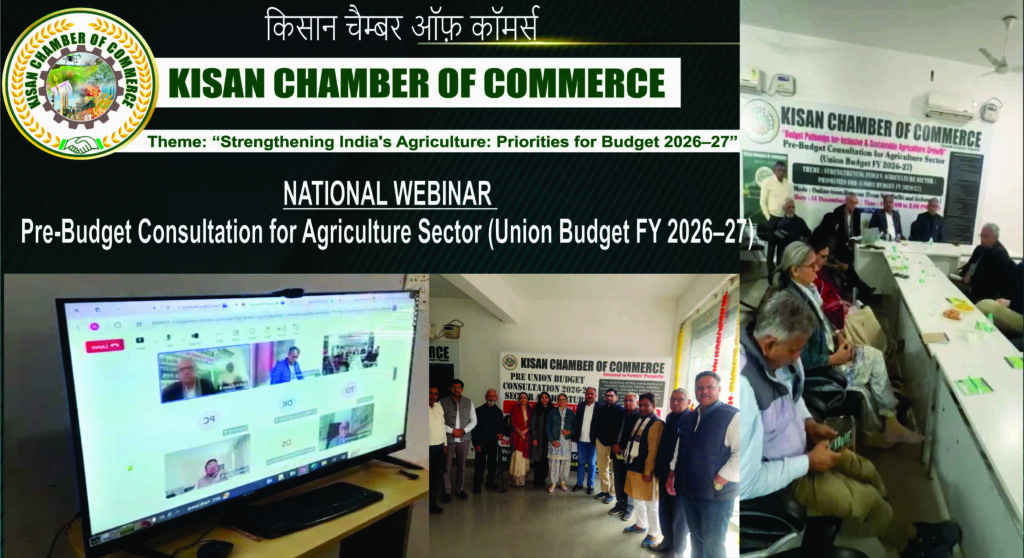
Pre-Budget Consultation for the Agriculture Sector for FY 2026–27.

National Webinar on Pre-Budget Consultation (FY 2026–27) Agriculture Sector Organised by: Kisan Chamber of Commerce Date: 14 December 2025 Time : 11:00AM to 2:00PM Mode: Virtual (National Webinar) Venue (Host Secretariat): Gohana, District Sonepat, Haryana Background and Objective The Kisan Chamber of Commerce convened a National Webinar on 14 December 2025 as part of its consultative process for the Union Budget FY 2026–27. The objective of the webinar was to gather evidence-based inputs, sectoral priorities, and actionable recommendations from farmers’ representatives, agricultural experts, economists, academicians, agri-entrepreneurs, cooperatives, and allied stakeholders to strengthen policy formulation for the agriculture and allied sectors. Program Inaugurated By – Justice Pritmpal, Former Judge Pb&Hr High Court, Chandigarh                Presided By –         Dr. Gurbachan Singh, Former Agriculture Commissioner                Coordination By-    Sh. Jitender Mor, President Kisan Chamber of Commerce Inaugural Session The webinar commenced with a formal welcome by the General Secretary, Kisan Chamber of Commerce, who outlined the significance of pre-budget consultations and reaffirmed the Chamber’s commitment to inclusive, farmer-centric policy advocacy. Key observations during the inaugural session included: The need for predictable income support and risk mitigation for farmers. Strengthening agri-market reforms with farmer safeguards. Accelerated adoption of climate-resilient agriculture. Technical and Consultative Deliberations Government of India for due consideration agriculture sector in the Union Budget 2026–27. Key Deliberations and Expert Views Justice Pritampal, Former Judge Pb & Hr High Court Chandigarh, Former Lokayukat, Haryana Rural youth play a crucial role in the future of agriculture; they act as agents of change by adopting new technologies and revitalizing food systems. However, they often face low wages, lack of resources (loans, land), and negative perceptions, leading to migration toward urban areas. To keep them engaged, programs focus on providing training in modern agribusiness, offering grants, connecting them to markets, promoting group farming and entrepreneurship (such as mushroom cultivation or composting), and transforming the image of agriculture into a profitable, high-tech business, which is done through extension services and media. Challenges for Rural Youth in Agriculture– a) Low Profitability & Income: Farming seen as subsistence, not a viable business. b) Resource Scarcity: Difficulty accessing credit, land, and modern tools. c) Negative Perception: Agriculture viewed as “old-school,” laborious, and less prestigious than urban jobs. d) Lack of Skills: Need for updated knowledge in modern techniques and management. e) Rural-Urban Migration: Youth leave for perceived better opportunities elsewhere, impacting food security. By addressing these challenges and taking advantage of new opportunities in the Union Budget 2026-27, rural youth can transform agriculture into a dynamic, profitable and sustainable sector for the future. 2. Dr. Gurbachan Singh, Former Agriculture Commissioner, Chairman ASRB, emphasized: Location-specific Organic, Natural and Integrated Agriculture & Livestock Farming Efficient water management Crop diversification Transition from flat planting to furrow planting Promotion of DSR (Direct Seeded Rice) Participatory agricultural research Climate change challenges and technology transfer Engagement of ex-servicemen in farm machinery operations and rural electricity generation 3. Sh. Jitender Mor, President, Kisan Chamber of Commerce The objective of the webinar was to deliberate on key challenges faced by Indian agriculture and to compile constructive, ground-level suggestions for inclusion in the Union Budget 2026–27. Discussions focused on farmers’ income enhancement, MSP reforms, crop diversification, irrigation and water management, agri-infrastructure, credit accessibility, crop insurance, input cost rationalization, climate-resilient agriculture, and promotion of agri-based MSMEs and startups. He said that the government should ensure that suggestions and advice are taken from the Farmers’ Chamber from time to time, just like the industrial chambers. Primarily, the participation of the Farmers’ Chamber of Commerce should be ensured in processes such as the country’s annual budget. The suggestions and advice provided by the chamber have been taken after consultations and in-depth discussions with economic experts, scientists, policymakers, agricultural industries, agricultural universities, leading farmers, and various stakeholders. 4. Dr. Balraj Singh, Former Vice Chancellor & Former Director ICAR, highlighted: Protected cultivation and integrated farming approaches Inadequate increase in research funding over the last 10 years Use of fertilizers, nanotechnology and drone technology, along with their limitations Issues of pollen shedding, climate change and human health Gluten content, water consumption per kg yield and glycemic index of wheat, paddy, barley and bajra. Rancidity in bajra Need for stability in pulse production Low production of edible oils; replacement of mustard with sunflower Importance of water harvesting 5. Sh. Harbir Singh, Editor-in-Chief, Rural-Voice, focused on: Past and present budget allocations for agriculture Several crop missions (pulses, cotton, etc.) announced but not effectively implemented Absence of a National Agriculture Policy MSP growth remaining below inflation Non-sharing of pre-budget consultation outcomes with farmers GDP interpretation through gross value minus taxes and production Need for periodic review of multiple schemes Issues with MFMB portal, where actual landowners do not receive J-Forms with their photographs Suggestions on the proposed Seed Bill, which have presently been halted 6. Dr. Premchand, Member Commission for Agricultural Costs & Prices, emphasized: Mandatory seed treatment to enhance crop productivity Lower soybean productivity in India compared to the USA Need for location-specific trials under AICRP Soil test-based nutrient application Agroforestry, livestock fodder development and deep irrigation practices 7. Dr. Rajbir Solanki, Former Vice Chancellor, stressed: Importance of marketing skills for farmers Self-grading based on moisture content Packaging and branding of farm produce Identifying suitable marketing systems Promoting entrepreneurship among farmers Cost-benefit analysis with focus on: How to produce? What to sell? How to sell? 8. Dr. Mamta Jain, Group Eitor & ECO Krishi Jgran –Rural Migration is fast becoming a matter of grave concern. COVID has taught us that the world can stop but Agriculture cannot… Every human being needs two meals a day, irrespective of his rank or profession. Hence it becomes our responsibility to take immediate steps to curb this catastrophe. The impending budget seriously needs to consider adding glamour to Rural India. With the smart phone revolution, every rural youth is now aware of the urban glitz… without understanding the challenges that accompany it. So NATION BUILDING needs to start with investing in making our villages attractive with Rural

Pre-Budget Consultation for the Agriculture Sector for FY 2026–27. Read More »

How Agriculture Drives Economic Growth

Agriculture has long been the backbone of economic development, playing a crucial role in poverty reduction, employment generation, and overall economic stability. From ancient civilizations to modern economies, farming and agribusiness have fueled growth by providing food security, raw materials, and trade opportunities. Here’s how agriculture continues to drive economic progress worldwide. 1. Employment and Livelihoods Agriculture remains one of the largest employers globally, especially in developing countries. According to the World Bank, over 60% of the population in Sub-Saharan Africa and 50% in South Asia depend on agriculture for their livelihoods. By creating jobs in farming, processing, and distribution, the sector reduces unemployment and supports rural economies. 2. Contribution to GDP In many nations, agriculture contributes significantly to the Gross Domestic Product (GDP). While industrialized economies may see a smaller percentage (e.g., ~1% in the U.S.), agriculture accounts for over 25% of GDP in some African and Asian countries. Growth in agricultural productivity directly boosts national income, enabling investments in infrastructure, education, and healthcare. 3. Food Security and Stability A strong agricultural sector ensures stable food supplies, preventing price shocks and hunger. Countries that achieve self-sufficiency in food production reduce import dependency, saving foreign exchange and strengthening economic resilience. For example, India’s Green Revolution in the 1960s transformed it from a food-deficient nation into a major exporter of rice and wheat. 4. Raw Materials for Industries Agriculture supplies raw materials for industries such as textiles (cotton), biofuels (sugarcane, corn), and pharmaceuticals (medicinal plants). Agro-based industries contribute to manufacturing growth, exports, and industrial diversification. For instance, Brazil’s ethanol industry thrives on sugarcane, boosting energy security and exports. 5. Trade and Export Earnings Agricultural exports are a major source of foreign exchange earnings. Countries like the Netherlands (horticulture), Thailand (rice), and Colombia (coffee) rely on farm exports to strengthen their trade balances. Global demand for high-value crops (e.g., avocados, organic foods) opens new revenue streams for farmers. 6. Rural Development and Poverty Reduction Investments in agriculture—such as irrigation, technology, and credit access—stimulate rural development. When farmers earn more, they spend on local goods and services, creating a multiplier effect. China’s agricultural reforms lifted 800 million people out of poverty since the 1980s by boosting rural incomes. 7. Technological Innovation and Agribusiness Modern agriculture leverages technology (AI, drones, precision farming) to increase yields sustainably. Agribusinesses—from farm machinery to food processing—generate employment and attract investments. Israel’s drip irrigation technology, for example, revolutionized water-efficient farming globally. 8. Economic Stability Agriculture provides stability to economies by ensuring food security and mitigating the impact of food price fluctuations. A strong agricultural base helps buffer against external shocks and promotes overall economic resilience. 9. Market Linkages Agriculture creates market linkages between rural and urban areas. Farmers supply produce to urban markets, creating demand for transportation, storage, and retail services. This interrelationship drives economic activity and regional development. Challenges and the Way Forward Despite its potential, agriculture faces challenges like climate change, land degradation, and market access barriers. Governments and private sectors must invest in: Conclusion Agriculture is not just about growing crops—it’s a powerful engine for economic growth, stability, and industrialization. By prioritizing agricultural innovation and inclusive policies, nations can harness its full potential to drive prosperity for future generations.

How Agriculture Drives Economic Growth Read More »

बजट 2025-26 में किसानों के लिए नई योजनाएं

बजट 2025-26 में किसानों के लिए नई योजनाएं. वित्त मंत्री ने कहा कि कृषि क्षेत्र सरकार की प्राथमिकता है।  केंद्रीय वित्त मंत्री निर्मला सीतारमण ने लगातार आठवीं बार केंद्रीय बजट 2025-26 पेश किया, विपक्ष के महाकुंभ भगदड़ को लेकर हंगामे के बावजूद वित्त मंत्री ने बजट पेश करना जारी रखा। केंद्रीय वित्त मंत्री निर्मला सीतारमण ने केंद्रीय बजट 2025 में कृषि क्षेत्र के लिए 1.27 लाख करोड़ का आवंटन किया है हालाँकि कृषि के कुल आवंटन में 2.5% की कमी आई है। उन्होंने कृषि क्षेत्र के लिए कई महत्वपूर्ण घोषणाएं की हैं। केंद्रीय बजट 2025 में कृषि, ग्रामीण विकास, रोजगार और आर्थिक विकास को प्राथमिकता दी गई है। कृषि आय को बढ़ावा देने, छोटे उद्योगों को समर्थन देने और बुनियादी ढांचे में सुधार करने के उद्देश्य से बनाई गई नीतियों के साथ, भारत सरकार की आर्थिक प्रगति और आत्मनिर्भरता को मजबूती पर जोर दिया है। वित्त मंत्री ने कहा कि यह बजट विकास, वृद्धि और मध्यम वर्ग को मजबूत करने के लिए समर्पित है। भारत इस सदी के 25 साल पूरे कर रहा है और विकसित राष्ट्र का विजन प्रगति को गति दे रहा है। उन्होंने जोर देकर कहा कि भारत दुनिया की सबसे तेजी से बढ़ती प्रमुख अर्थव्यवस्था बना हुआ है।उन्होंने कहा आज के बजट में 10 व्यापक क्षेत्र पर ध्यान केंद्रित किया गया है जिसमें सबसे पहला नंबर है कृषि क्षेत्र। प्रधानमंत्री धन–धान्य कृषि योजना– यह योजना राज्यों की भागीदारी के साथ शुरू की जाएगी। इसके अंतर्गत कम उत्पादकता वाले 100 जिलों को शामिल किया गया है। इन जिलों में कृषि उत्पादक बढ़ाने फसल विविधीकरण और टिकाऊ कृषि पद्धतियों को अपनाया जाएगा,  पंचायत और ब्लॉक स्तर पर फसल कटाई के बाद भंडारण को बढ़ाया जाएगा, सिंचाई सुविधा में सुधार होगा और दीर्घकालिक कालीन और अल्पकालिक ऋण की उपलब्धता को सुगम बनाया जाएगा। धन-धान्य कृषि योजना में 1.7 करोड़ किसान शामिल होंगे, इस कार्यक्रम का उद्देश्य किसानों के लिए पर्याप्त अवसर पैदा करना है। दालों में आत्मनिर्भरता – वित्त मंत्री ने कहा कि केंद्र खाद्य तेलों में आत्मनिर्भरता हासिल करने के लिए राष्ट्रीय खाद्य तिलहन मिशन को लागू कर रहा है। उन्होंने कहा “हमारी सरकार उड़द, तुअर और मसूर पर ध्यान केंद्रित करते हुए दालों में आत्मनिर्भरता मिशन के तहत 6 साल का कार्यक्रम शुरू करेगी”। इसके अलावा वित्त मंत्री ने कहा कि आय के स्तर में वृद्धि के साथ-साथ फलों की खपत भी बढ़ रही है, इसलिए राज्यों के सहयोग से किसानों का पारिश्रमिक भी बढ़ेगा। बिहार पर विशेष ध्यान देते हुए उन्होंने कहा राज्य में मखाना बोर्ड की स्थापना की जाएगी, बोर्ड मखाना किसानों को प्रशिक्षण और सहायता प्रदान करेगा। बिहार में नेशनल इंस्टीट्यूट आफ फूड टेक्नोलॉजी एंटरप्रेन्योरशिप एंड मैनेजमेंट Niftem बनाया जाएगा। किसानों के उत्पाद की गुणवत्ता बढ़कर उसकी आय में बढ़ोतरी करेगा। राष्ट्रीय मिशन उच्च उपज वाले बीज-वित्त मंत्री ने कहा कि मोदी सरकार उच्च उपज वाले बीजों पर राष्ट्रीय मिशन शुरू करेगी। इसका उद्देश्य अनुसंधान पारिस्थितिक तंत्र को मजबूत करना, उच्च उपज, किट प्रतिरोध और जलवायु लचीलापन वाले बीजों का लक्षित विकास और प्रसार करना और जुलाई 2024 से जारी 100 से अधिक बीज किस्म की व्यवसायिक उपलब्धता सुनिश्चित करना होगा। समृद्धि ग्रामीण के अंतर्गत समृद्ध गांव और अनुकूल कार्यक्रम प्रारंभ किया जाएगा। इसमें कौशल, तकनीकी और निवेश के माध्यम से रोजगार को बढ़ावा दिया जाएगा साथ ही ग्रामीण अर्थव्यवस्था को अधिक बल मिलेगा। योजना के पहले चरण में 100 विकासशील कृषि जिलों को शामिल किया गया है कार्यक्रम खास तौर पर युवाओं, सीमांत, छोटे किसान, भूमिहीन परिवार और ग्रामीण महिलाओं पर केंद्रित होगा। एमएसएमई के लिए लोन गारंटर कर 5 करोड़ से बढ़कर 10 करोड़, 1.5 लाख करोड़ तक का कर्ज दिया जाएगा। इसका लाभ केसीसी के दायरे में आने वाले लगभग 7.7 करोड़ किसानों, मछुआरों और पशु पालकों को मिलेगा। छोटे किसानों के लिए बजट की है बड़ी घोषणा है। कपास उत्पादकता मिशन के तहत कपास के पैदावार बढ़ाने के लिए 5 साल तक मिशन मोड पर काम होगा इससे देश के कपड़ा उद्योग को मजबूती मिलेगी। किसान की आमदनी बढ़ाने और परंपरागत कपड़ा क्षेत्र के लिए अच्छी कपास की आपूर्ति सुनिश्चित करने का प्रयास किया जाएगा। यूरिया संयंत्र असम के नामरूप में सालाना 12.7 मेट्रिक टन क्षमता वाला नया यूरिया संयंत्र स्थापित किया जाएगा। इस संयंत्र के साथ-साथ पूर्वी क्षेत्र में निष्क्रिय पड़ी इकाइयों में उत्पादन शुरू किया जाएगा, जिस देश में यूरिया की आपूर्ति को और अधिक बढ़ावा मिलेगा

बजट 2025-26 में किसानों के लिए नई योजनाएं Read More »

किसान दिवस – 2024  ‘किसान है कौन’ और ‘खड़ा कहाँ है’

हर साल की तरह इस साल भी राष्ट्रीय किसान दिवस मनाया जा रहा है, लेकिन कृषि के इस पेशे से अब अन्नदाता का मोहभंग होने लगा है.किसानों के प्रति बेरुखी से कृषि प्रधान देश गम्भीर भारत में ये घाटे का सौदा साबित हो रहा है.विकास के नाम पर सरकारी, राजनीतिज्ञ का कहीं यह वोट का अखाड़ा तो नहीं है। इससे उबरना होगा नहीं तो एक दिन किसान देश के मानचित्र से गायब हो जाएगा तथा अर्थव्यवस्था के नाम पर भारत दुनिया के नक्शे में अपना स्थान ढूंढता रह जाएगा। यह जानना जरूरी हो गया कि ‘किसान है कौन’ और ‘खड़ा कहाँ है’. किसान देश की अर्थव्यवस्था की रीड की हड्डी है। देश के आधे से अधिक कारोबार उद्योग व बड़े व्यापार किस पर टिके हैं….? जाहिर है यह सब किसानों की मेहनत के दम पर टिके हैं दुनिया के हर मनुष्य के पेट की क्षुधा  को कौन शांत करता है….? उत्तर स्पष्ट है “किसान और सिर्फ किसान”। लेकिन उसका हाल यह है कि वह सुविधा न मिलने के श्राप से ग्रस्त है। भारत में आज भी लगभग 70% लोग आज भी गांव में निवास करते हैं और उनकी आजीविका का मुख्य साधन खेती है। भारत में किसानों की संरचना जाति, नृजातीयता, धर्म, भाषा आदि पर आधारित है। भारत में कृषक वर्ग की संरचना का अध्ययन करते समय तथा भारतीय कृषि की प्रकृति का अध्ययन करते समय विभिन्न प्रकार के कृषक वर्गों का पता लगाने के लिए तीन सिद्धांत तैयार किए थे। तीन सूत्रीय सिद्धांत में जीवन से प्राप्त होने वाली सभी प्रकार की आमदनी शामिल हैं, (जैसे किराया, फसल तथा वेतन )। अधिकारों की प्रकृति (जैसे स्वामित्व तथा किराएदारी, फसल का हिस्सा या कोई अधिकार नहीं) तथा खेत में किया गया काम (कोई काम नहीं करना, आंशिक काम पारिवारिक श्रम द्वारा किया गया काम, वेतन के बदले काम करना आदि)। यह मापदंड भी भारत में कृषि कार्यों से जुड़े लोगों के तीन वर्गों की अलग-अलग पहचान करने में मदद करता है। भारत में इन तीनों वर्गों में जो लोग शामिल हैं, उन्हें भूस्वामी, किसान तथा मजदूर कहा जाता है, भूस्वामी खेती की जमीन के मालिक होते हैं – यह संपन्न व अमीर होते हैं। किसान उन्हें कहते हैं जो खेतों में स्वयं काम करते हैं। वे या तो अपनी जमीनों के मालिक होते हैं या अन्य भूस्वामीयों के खेतों को किराए पर लेकर उन पर खेती करते हैं। इन किसानों को भी दो श्रेणियां में बांटा जा सकता है – छोटे भूस्वामी, तथा जीवन-निर्वाह करने के लिए दूसरों के खेत किराए पर लेकर उनमें फसलें उगाने वाले किसान। कृषि पर निर्भर तीसरा वर्ग जो मजदूर कहलाता है, उसे भी तीन उपविभागों मैं बांटा जा सकता है – कुल कम जमीन वाले गरीब किसान, बटाई पर खेती करने वाले भूमिहीन मजदूर। भू-स्वामियों की आय का मुख्य स्रोत उनकी जमीन पर उनके मालिकाना हक था। बड़े भूस्वामी जमीदार कहलाते थे। वह अपनी कृषि भूमि को ऊंचे किराए पर फसल उगाने वाले किसानों को देते थे। उन्हें जमीन किराए पर उठाने के बदले मोटी रकम मिल जाती थी, फिर भी वे मजदूरों की पगार में कटौती करते रहते थे। बड़े-भूस्वामी में कृषि संबंधी कोई काम नहीं करते थे। वह अच्छी पैदावार के लिए भूमि प्रबंधन का दायित्व भी अपने हाथों नहीं रखते थे। दूसरी श्रेणी के भू-स्वामी भी बड़ी जमीनों के मालिक थे। उनकी जमीनें उनके निवास स्थान के निकटवर्ती क्षेत्र में होती थी। ये भी संपन्न होते थे और खेतों में स्वयं काम नहीं करते थे। यह मजदूर से खेतों में काम करवाते थे और स्वयं उनके कामों का निरीक्षण करते थे। मजदूर ही खेतों में काम करते थे और भूमि प्रबंधन करते थे या तो जमीनों पर उनके अधिकार पारंपरिक होते थे या उनके अपनी जमीनों के अधिकारियों पर वैधानिक अधिकार भी होते थे। परंतु वे मालिकों के बराबरी के नहीं होते थे। किसने की अन्य श्रेणियां में छोटे भू-स्वामी होते हैं जो स्वयं अपने खेतों में काम करते हैं। वे केवल फसल काटने के लिए मजदूरों को काम पर लगाते हैं, अन्य सारे काम स्वयं करते हैं। दूसरी और वे किसान होते हैं जो बहुत सारी जमीनें किराए पर ले लेते हैं और इन खेतों में काम करके फसलें उगाने के इनके अधिकार सुरक्षित रखते हैं। किसानों की तीसरी श्रेणी में वे मजदूर आते हैं जो दूसरों के खेतों में काम करके गुजारा करते हैं। वे कुछ जमीन फसल उगाने के लिए भू-स्वामियों से ले लेते हैं और उसमें होने वाली पैदावार से अपने परिवारों का जीवन- निर्वाह करते हैं। उनके जमीनों पर काम करने के अधिकार अस्थाई होते हैं। वे इसके बदले मजदूरी प्राप्त करते हैं और यह मजदूरी भूमि की पैदावार से ही प्राप्त करते हैं। अत: वे उतना ही पैदा करते हैं जितने में उनकी मजदूरी निकल जाए। दूसरी उप श्रेणी में फसलों में साझेदारी आती है। वे खेतों में दूसरों के लिए काम करते हैं और फसल में हिस्सा लेते हैं। अंतिम उप श्रेणी में भूमिहीन मजदूर आते हैं। अब मजदूरी पर दूसरे के खेतों में काम करते हैं और मजदूरी के रूप में जो भी उन्हें प्राप्त होता है उसे अपने परिवारों का पालन-पोषण करते हैं। किसानों की राजनैतिक अर्थव्यवस्था; प्रायः बाहरी संगठनों द्वारा किसानों का राजनैतिक शोषण होता है। इसके लिए किसानों की राजनैतिक अर्थव्यवस्था जिम्मेदार होती है। यहां व्यापक रूप से बाजार मूलक अर्थव्यवस्था का विस्तार हो जाता है वहां उनकी संभावना अधिक बढ़ जाती है। बाजार की राजनीति द्वारा किसानों के शोषण की प्रवृत्ति बढ़ रही है। ऐसे शोषण तथा बाजार की राजनीति के सामने घुटन टेकने की व्यवस्था से बचने के लिए यह आवश्यक है कि किसान जागरूक हो और अपने हितों की सुरक्षा के लिए संघर्ष करें न कि बाहरी दबावों के आगे समर्पण कर दें। इसलिए किसान बाजारों के साथ लंबे समय तक चलने वाले आर्थिक सौदे नहीं करते अथवा यह कहें कि वे बाजारों की विचारधारा उसको पूरी तरह स्वीकार नहीं करते। उनके उत्पादन के केंद्र में अपने जीवन निर्वाह और आजीविका चलाना प्रमुख रूप से मौजूद रहता है। कृषक समाजों में नेता स्वार्थी प्रवृत्ति के होते हैं और वह अपने निहित स्वार्थ के लिए कृषक अर्थव्यवस्था में राजनीतिक मामले शामिल कर देते हैं। आमतौर पर किसानों

किसान दिवस – 2024  ‘किसान है कौन’ और ‘खड़ा कहाँ है’ Read More »

कार्बन क्रेडिट का मुद्रीकरण: भारतीय किसान कैसे लाभान्वित हो सकते हैं

कार्बन क्रेडिट का मुद्रीकरण: भारतीय किसान कैसे लाभान्वित हो सकते हैं खराब मिट्टी की सेहत और घटता मुनाफ़ा भारतीय किसानों की  परेशानी का सबब बन रहा है। कार्बन क्रेडिट बेचना इन समस्याओं को हल करने का एक अवसर हो सकता है। घरेलू कार्बन बाजार विकसित करने का उद्देश्य ऊर्जा संरक्षण (संशोधन) विधेयक, 2022 में शामिल किया गया था, जिसे 8 अगस्त को लोकसभा में पेश और पारित किया गया था। जबकि विधेयक नवीकरणीय ऊर्जा उद्योग पर केंद्रित है, देश के किसान को भी यह अप्रत्यक्ष रूप से लाभ पहुंचा सकता है। भारत की लगभग 60 प्रतिशत जनसंख्या कृषि में कार्यरत है। मिट्टी और पानी जैसे प्राकृतिक संसाधनों पर निर्भरता को देखते हुए, कृषि जलवायु संकट और भूमि क्षरण, कीमतों में बाजार की अस्थिरता और बढ़ती इनपुट लागत सहित इसके प्रभावों से काफी प्रभावित होती है। इससे कृषि उत्पादन की स्थिरता और उस पर निर्भर लोगों की आजीविका प्रभावित होती है। मृदा स्वास्थ्य में सुधार महत्वपूर्ण है हरित क्रांति के बाद से उर्वरकों और कीटनाशकों के गहन उपयोग ने मिट्टी में कार्बन के स्तर को कम कर दिया है और मिट्टी को ख़राब कर दिया है। विभिन्न अनुमानों से पता चलता है कि भारत के कुल भौगोलिक भूमि क्षेत्र का 30 प्रतिशत तक क्षरण हो चुका है – इस भूमि का लगभग आधा हिस्सा कृषि भूमि है, विशेष रूप से असिंचित/वर्षा आधारित कृषि भूमि। मिट्टी में कार्बनिक पदार्थ होते हैं जिनमें कार्बन, नाइट्रोजन और फास्फोरस जैसे तत्व होते हैं। मिट्टी का लगभग 50 प्रतिशत कार्बनिक पदार्थ कार्बन से बना है। इस प्रकार, मृदा कार्बन माप समग्र मृदा स्वास्थ्य का एक अच्छा संकेत प्रदान करता है। मृदा कार्बन पृथक्करण एक ऐसी प्रक्रिया है जिसके द्वारा हवा के कार्बन डाइऑक्साइड को निकाला जाता है और मिट्टी के कार्बन पूल में संग्रहीत किया जाता है। प्रकाश संश्लेषण के दौरान, पौधे वायुमंडल से कार्बन डाइऑक्साइड और पानी को ऑक्सीजन, चीनी और कार्बन युक्त यौगिकों में तोड़ देते हैं। ये जड़ों और नीचे की मिट्टी तक पहुंचते हैं और मिट्टी के नीचे के जीवों को पोषण देते हैं। मिट्टी के नीचे बायोमास में कमी, मिट्टी के कटाव में वृद्धि, और अधिक जुताई के कारण कार्बन डाइऑक्साइड का उच्च प्रतिशत वापस हवा में छोड़ दिया जाता है, जिससे मिट्टी में कार्बन की मात्रा कम हो जाती है। ऐसी प्रथाएं हैं जिनका पालन किसान मिट्टी के स्वास्थ्य को बहाल करने के लिए कर सकते हैं मृदा स्वास्थ्य में सुधार के लिए बायोमास बढ़ाने और मिट्टी से कार्बन के नुकसान को कम करने वाली तकनीकों को अपनाया जाना चाहिए। ये इन पुनर्योजी कृषि पद्धतियों में शामिल हैं: • अवशेषों की मल्चिंग और मिट्टी के जैव अपशिष्ट का पुनर्चक्रण • खाद, कम्पोस्ट और जैवउर्वरक का उपयोग • बेहतर फसल चक्र और अंतरफसल • बाढ़ सिंचाई और रासायनिक उपयोग को कम करना • भूमि को हर समय ढका रखने के लिए ढककर फसल उगाना जब किसान कुछ मौसमों तक इन प्रथाओं का पालन करते हैं, तो मिट्टी की कार्बन सामग्री में सुधार होता है। फलस्वरूप उपज भी बढ़ती है। हालाँकि, किसानों को इन प्रथाओं को अपनाने के लिए प्रोत्साहन की आवश्यकता हो सकती है क्योंकि ये समय लेने वाली और महंगी हो सकती हैं, और अल्पावधि में अलाभकारी हो सकती हैं। स्वैच्छिक कार्बन बाजारों में कार्बन क्रेडिट का व्यापार करने की क्षमता इस प्रोत्साहन के रूप में काम कर सकती है। कार्बन क्रेडिट मुद्रीकरण एक चुनौती हो सकता है चूँकि मृदा स्वास्थ्य में सुधार स्वाभाविक रूप से मृदा कार्बन स्तर को बढ़ाने की क्षमता से जुड़ा हुआ है, इसलिए इसे प्राप्त करने के लिए मृदा कार्बन स्तर की निरंतर निगरानी और इसके सुधार के लिए प्रोत्साहन की आवश्यकता होती है। मृदा कार्बन के मुद्रीकरण के लिए कार्बन क्रेडिट की अच्छी समझ की आवश्यकता होती है। कार्बन क्रेडिट ऐसे प्रमाणपत्र हैं जो ग्रीनहाउस गैसों की मात्रा का प्रतिनिधित्व करते हैं जिन्हें हवा से बाहर रखा गया है या इससे हटा दिया गया है। एक कार्बन क्रेडिट प्रमाणित करता है कि वायुमंडल से एक मीट्रिक टन कार्बन डाइऑक्साइड हटा दिया गया है। रिमोट सेंसिंग डेटा और एआई में प्रगति ने उपग्रह डेटा के माध्यम से कार्बन स्तर की भविष्यवाणी को सक्षम किया है, और यह उन तरीकों में से एक के रूप में कार्य करता है जिसके माध्यम से कार्बन क्रेडिट की गणना की जाती है। कंपनियाँ और सरकारें अपनी जलवायु प्रतिबद्धताओं को पूरा करने के लिए कार्बन क्रेडिट खरीदती हैं। कार्बन बाज़ार में भाग लेने से किसानों को लाभ हो सकता है इसका सीधा लाभ यह है कि किसानों को उस कार्बन के लिए नकद-आधारित प्रोत्साहन मिलता है, जिससे उन्होंने अपनी भूमि में कार्बन को अलग करने में मदद की है। एक किसान जो एक कार्बन क्रेडिट लेता है, वह मौजूदा बाजार कीमतों पर लगभग 780 रुपये कमा सकता है, लेकिन बड़े निगम कार्बन क्रेडिट के बड़े हिस्से को सीधे खरीदने पर किसानों को बेहतर दरें – 2,000 रुपये तक – प्रदान करने की संभावना रखते हैं। हमारे अनुभव में, जो किसान पुनर्योजी प्रथाओं का पालन करते हैं वे प्रति एकड़ एक से चार कार्बन क्रेडिट जमा करने में सक्षम हैं। किसानों को जो अप्रत्यक्ष लाभ अनुभव होता है वह मिट्टी में जमा कार्बन के कारण मिट्टी के स्वास्थ्य में सुधार है। इस सुधार का अनुमान यह निर्धारित करके लगाया जा सकता है कि क्या मिट्टी निम्नलिखित में से कोई भी विशेषता प्रदर्शित करती है: बढ़ी हुई जल धारण क्षमता, कम मिट्टी का घनत्व, पानी की घुसपैठ में वृद्धि, पोषक तत्वों की उपलब्धता में वृद्धि और मिट्टी की सतह के तापमान में कमी। कार्बन क्रेडिट कार्यक्रम किसानों के लिए कैसे काम करते हैं? हालाँकि व्यक्तिगत किसानों के लिए इस मार्ग पर चलना आसान नहीं है, गैर-लाभकारी और किसान-उत्पादक संगठन (एफपीओ) उन्हें कार्बन क्रेडिट कार्यक्रमों का लाभ उठाने में मदद कर सकते हैं। 1. एक समूह के रूप में पुनर्योजी कृषि पद्धतियों का पालन करें गैर-लाभकारी संस्थाओं/एफपीओ के लिए पहला कदम अपने किसान समूहों के बीच पुनर्योजी कृषि प्रथाओं को बढ़ावा देना है, विशेष रूप से मिट्टी के कार्बनिक पदार्थ और मिट्टी के कार्बन को बढ़ाने पर ध्यान केंद्रित करना है। चूंकि इसमें समय लग सकता है और शुरुआत में पैदावार कम हो सकती है, इसलिए शुरुआती वर्षों के दौरान किसानों को

कार्बन क्रेडिट का मुद्रीकरण: भारतीय किसान कैसे लाभान्वित हो सकते हैं Read More »

कृषि एवं किसानों के लिए कैबिनेट ने 13,966 करोड़ की 7 योजनाओं को दी मंजूरी

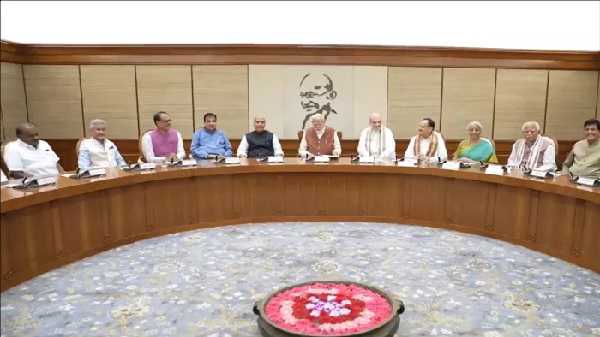
प्रधानमंत्री नरेंद्र मोदी की अध्यक्षता में केंद्रीय मंत्रिमंडल की 2 सितंबर को बैठक हुई। वहीं बैठक के बाद कृषि से जुड़े प्रस्तावों की मंजूरी की केंद्रीय मंत्री अश्विनी वैष्णव द्वारा जानकारी दी गई। इस दौरान उन्होंने कहा कि देश के किसानों की आय और उनकी जिंदगियों को सुधारने के लिए कैबिनेट की तरफ से 7 प्रस्तावों को मंजूरी दी गई है। जिसका देशभर के सभी किसानों को लाभ मिलेगा. यह कार्यक्रम डिजिटल कृषि मिशन, फसल विज्ञान इत्यादि शामिल है. केंद्र सरकार की तरफ से किसानों के लिए सप्ताह का पहला दिन तोहफा लेकर आया है. किसानों को बड़े स्तर पर फायदा देने वाली सात योजनाओं को मंजूरी दी गई है. विस्तार से चर्चा करें तो मंत्रिमंडल द्वारा एग्रीकल्चर सेक्टर से जुड़े 7 बड़े कार्यक्रमों के लिए लगभग 14 हजार करोड रुपए के खर्च को मंजूरी दी गई है. पीएम नरेंद्र मोदी की अध्यक्षता में हुई केंद्रीय मंत्रिमंडल की मीटिंग में फैसला इन कार्यक्रमों की मंजूरी देने का फैसला किया गया है. इसमें इसमें फसल विज्ञान, मिशन डिजिटल, कृषि जैसी लाभकारी योजनाएं भी शामिल है. सूचना एवं प्रसारण मंत्री अश्विनी वैष्णव ने मंत्रिमंडल में लिए गए फैसलों की जानकारी मीडिया को दी. कृषि सेक्टर में इन सात कार्यक्रमों के लिए 13960 करोड रुपए से ज्यादा का आवंटन किया गया है. अश्विनी वैष्णव ने कहा कि, ‘ आज सोमवार को कैबिनेट मीटिंग में किसानों के जीवन को और ज्यादा सुविधाजनक और बेहतर बनाने के लिए एवं आय में इजाफा करने के लिए सात बड़े फैसले केंद्र सरकार द्वारा लिए गए हैं. इसमें डिजिटल कृषि मिशन जो खेती के लिए डिजिटल सार्वजनिक संरचना की तर्ज पर विकसित किया जा रहा है. आई नजर डालें सात कार्यक्रमों पर, कृषि शिक्षा, प्रबंधन और सामाजिक विज्ञान को मजबूत करना: कुल 2,291 करोड़ रुपये के बजट के साथ इस योजना का उद्देश्य कृषि अनुसंधान और शिक्षा को आधुनिक बनाना है। यह योजना नई शिक्षा नीति 2020 के अनुरूप है और इसमें AI, बिग डेटा और डिजिटल DPI सहित नवीनतम तकनीकों का इस्तेमाल किया जाएगा। इसमें प्राकृतिक खेती और जलवायु रिजिलेंस को भी शामिल किया जाएगा। बागवानी का सतत विकास: 860 करोड़ रुपये के आवंटन के साथ, इस योजना का उद्देश्य बागवानी के माध्यम से किसानों की आय बढ़ाना है। इसमें उष्णकटिबंधीय, उपोष्णकटिबंधीय और समशीतोष्ण फसलों के साथ-साथ जड़, कंद, बल्बनुमा, सब्जी, फूलों की खेती और औषधीय पौधों सहित कई तरह की फसलें शामिल हैं।  सतत पशुधन स्वास्थ्य और उत्पादन: 1,702 करोड़ रुपये के बजट वाली इस योजना का उद्देश्य बेहतर पशुधन और डेयरी उत्पादन के माध्यम से किसानों की आय बढ़ाना है। इसमें पशु स्वास्थ्य प्रबंधन, पशु चिकित्सा शिक्षा, डेयरी उत्पादन तकनीक और पशु आनुवंशिक संसाधन प्रबंधन शामिल हैं।  डिजिटल एग्रीकल्चर मिशन: 2,817 करोड़ रुपये के बजट के साथ, इस मिशन का उद्देश्य किसानों के जीवन को बेहतर बनाने के लिए प्रौद्योगिकी का लाभ उठाना है। यह योजना दो आधारभूत स्तंभों- एग्री स्टैक और कृषि निर्णय सहायता प्रणाली पर आधारित है। इसमें एआई, बिग डेटा और सेटेलाइट डेटा जैसी उन्नत तकनीकें शामिल हैं। वित्त मंत्री निर्मला सीतारमण ने 23 जुलाई को पेश बजट में कृषि के लिए डिजिटल पब्लिक इंफ्रास्ट्रक्चर विकसित करने की घोषणा की थी। खाद्य और पोषण सुरक्षा के लिए फसल विज्ञान: 3,979 करोड़ रुपये के आवंटन वाली इस योजना का लक्ष्य किसानों को जलवायु-अनुकूल खेती और देश को 2027 तक खाद्य सुरक्षा के लिए तैयार करना है। इस योजना के छह स्तंभों में अनुसंधान और शिक्षा, आनुवंशिक सुधार, दलहन व तिलहन फसलों में सुधार के साथ ही कीटों, सूक्ष्म जीवों और परागणकों पर अनुसंधान शामिल हैं। प्राकृतिक संसाधन प्रबंधन: 1,115 करोड़ रुपये के बजट के साथ, यह योजना दीर्घकालिक कृषि उत्पादकता सुनिश्चित करने के लिए प्राकृतिक संसाधनों के सतत प्रबंधन पर ध्यान केंद्रित करती है। कृषि विज्ञान केंद्रों को मजबूत बनाना: कृषि विज्ञान केंद्रों (केवीके) में सुधार के लिए 1,202 करोड़ रुपये के परिव्यय को मंजूरी दी गई है। ये केंद्र किसानों को कृषि तकनीक हस्तांतरित करने में महत्वपूर्ण भूमिका निभाते हैं। 

कृषि एवं किसानों के लिए कैबिनेट ने 13,966 करोड़ की 7 योजनाओं को दी मंजूरी Read More »

Bio E3 policy aims to enhance India’s bio-manufacturing ecosystem through innovation-driven support.

The Union Cabinet chaired by Shri Narendra Modi has approved the ‘BioE3 (Biotechnology for Economy, Environment and Employment) Policy’ proposed by the Department of Biotechnology. The policy aims to promote high-performance bio-manufacturing in India. BioE3 policy will prove to be a milestone not only for bio-economy but a game changer for Viksit Bharat @2047 “As India emerges as a Global Biotech Powerhouse, Prime Minister Narendra Modi will be hailed across the world as the champion of new Biotech Boom” says Union Minister Dr. Jitendra Singh The PPP model will be an intrinsic part of Bioe3 Policy implementation incentivizing the industry to promote employment generation India’s bio-economy skyrockets from $10 billion in 2014 to over $130 billion in 2024, with projections to reach $300 billion by 2030: Dr. Singh  “The BioE3 policy will significantly impact various sectors such as food, energy, and health,” the Science and Technology Minister said. He also highlighted six thematic topics which were 1. Bio-based chemicals and enzymes; 2. Functional foods and smart proteins; 3. Precision Biotherapeutics; 4. Climate-friendly agriculture; 5. Carbon capture and its use;  6. Futuristic marine and space research. Reiterating the success achieved in the space and bio-economy sectors, the Minister underlined that the PPP model will be an intrinsic part of the Bioe3 policy implementation to incentivize industry to boost job creation. The policy is a push towards a green, low-consumption, and self-reliant India and aims to harness global challenges such as climate change, unsustainable patterns of material consumption, and waste generation to bring about sustainable innovation. A primary objective of the initiative taken by the Department of Biotechnology is to encourage the transformation of chemical-based industries into more sustainable bio-based industrial models by promoting a circular economy. The policy focuses on six key sectoral pillars: high-value bio-based chemicals, bio-polymers and enzymes, smart proteins and functional foods, precision bio-medicals, climate resilient agriculture, carbon capture and its utilization, marine and space research. Other key aspects of the Bio-e3 policy include innovation-driven research and development and entrepreneurship across various thematic sectors to expedite technology commercialization by establishing bio-manufacturing, bio-foundry, and bio-AI hubs. polymers, bio-plastics, bio-In the interim budget presented before the elections, Finance Minister Nirmala Sitharaman had mentioned, “A new scheme of bio-manufacturing and bio-foundry to provide eco-friendly alternatives like biodegradable polymers, bio-plastics, bio-pharmaceuticals and bio agri-inputs”. Releasing the policy today, Union Science and Technology Minister Dr Jitendra Singh said that the world’s future economy will be largely bio-powered and India has the opportunity to lead the bio-revolution of the 21st century. “Just as the West led the IT-driven industrial revolution of the 1990s, India can lead the next bio-driven revolution because it is in an advantageous position in terms of bio-resources and bio-economy, allowing the West to Couldn’t find happiness.”, Concerned,” he said. Dr Singh also emphasized that the world will fundamentally change when global economies stop relying on the manufacturing sector and rely more on recycling processes. “The economies of the future will depend on taking what you waste and recycling it appropriately to become more independent domestically.” he said, the Bio-E3 policy is in line with the government’s initiatives of ‘Green Growth’, ‘Net Zero’ Economy, ‘Eco Lifestyle’, Make in India and Self-reliant India. “I am sure that this initiative will proudly contribute to Vision 2047 in the form of a bio-science aspect.” This policy aims to leverage biotechnology for sustainable growth, with a strong emphasis on agriculture. Here’s how it can help the agriculture sector: Overall, the India Bio-E3 Policy is designed to transform agriculture by integrating advanced biotechnological practices, making it more sustainable, resilient, and economically viable for farmers.

Bio E3 policy aims to enhance India’s bio-manufacturing ecosystem through innovation-driven support. Read More »

Scroll to Top